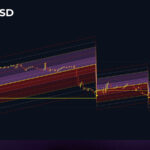
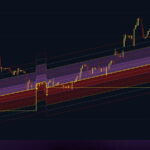
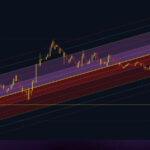
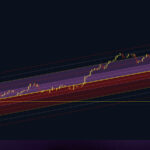
Realytica Channelsuses the coreMORPHindicator to automatically form price channels — giving structure to movement that would otherwise require manual interpretation and chart drawings.
Channels form on occurrences defined in the dashboard, building outward from that point with a barrier and level system surrounding the channel center. Direction, occurrence type, fractional build values, barrier levels, and visual preferences are all configurable — shaped to fit how you trade, not the other way around.
Automated Channel with barriers.
Timeframe change inside indicator.
Ready made alarms with editable default messages.
Asset independent. Works across equities, futures, forex and crypto
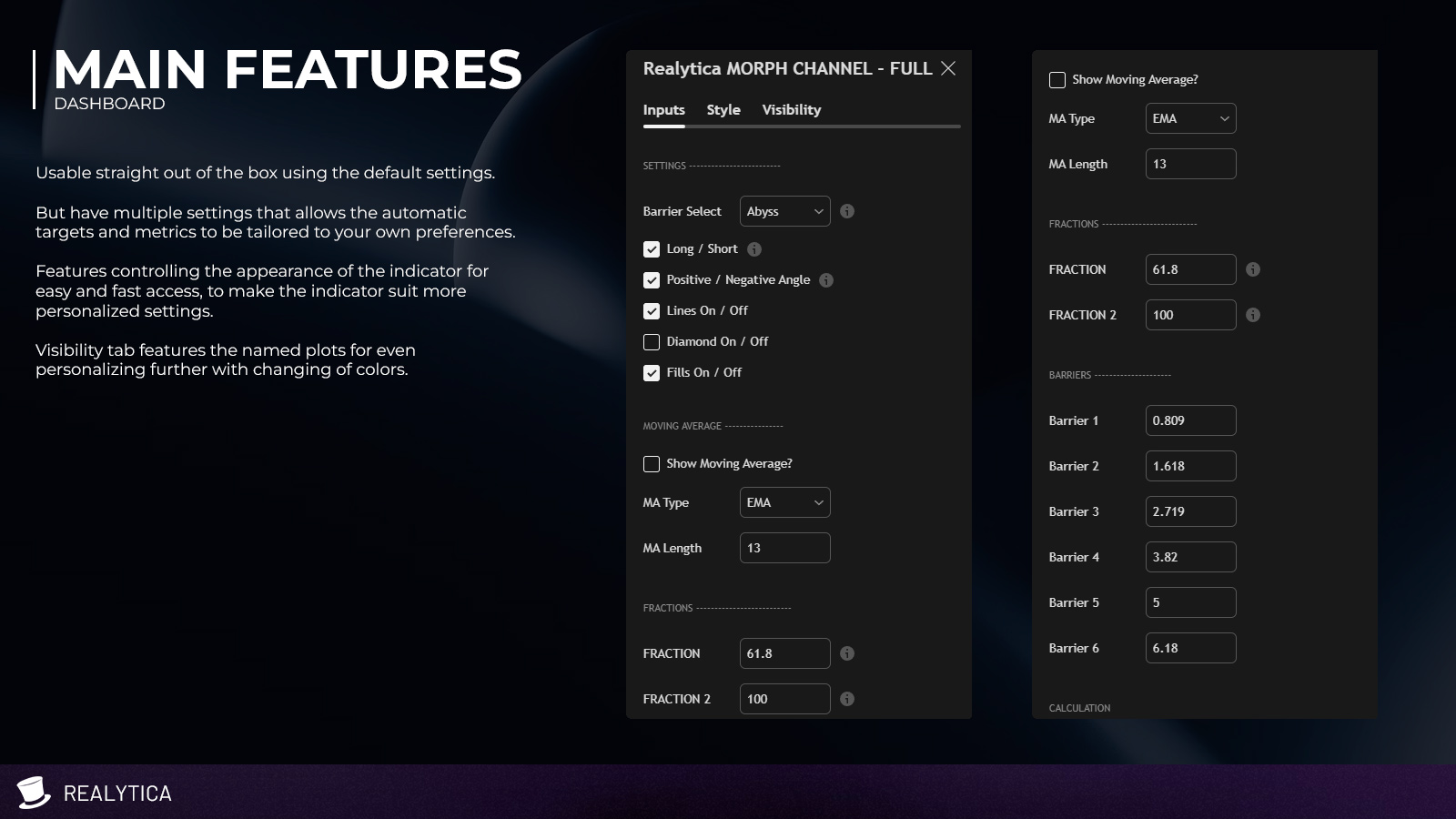
Customizable visual settings.
Shared color coding with rest of indicators.
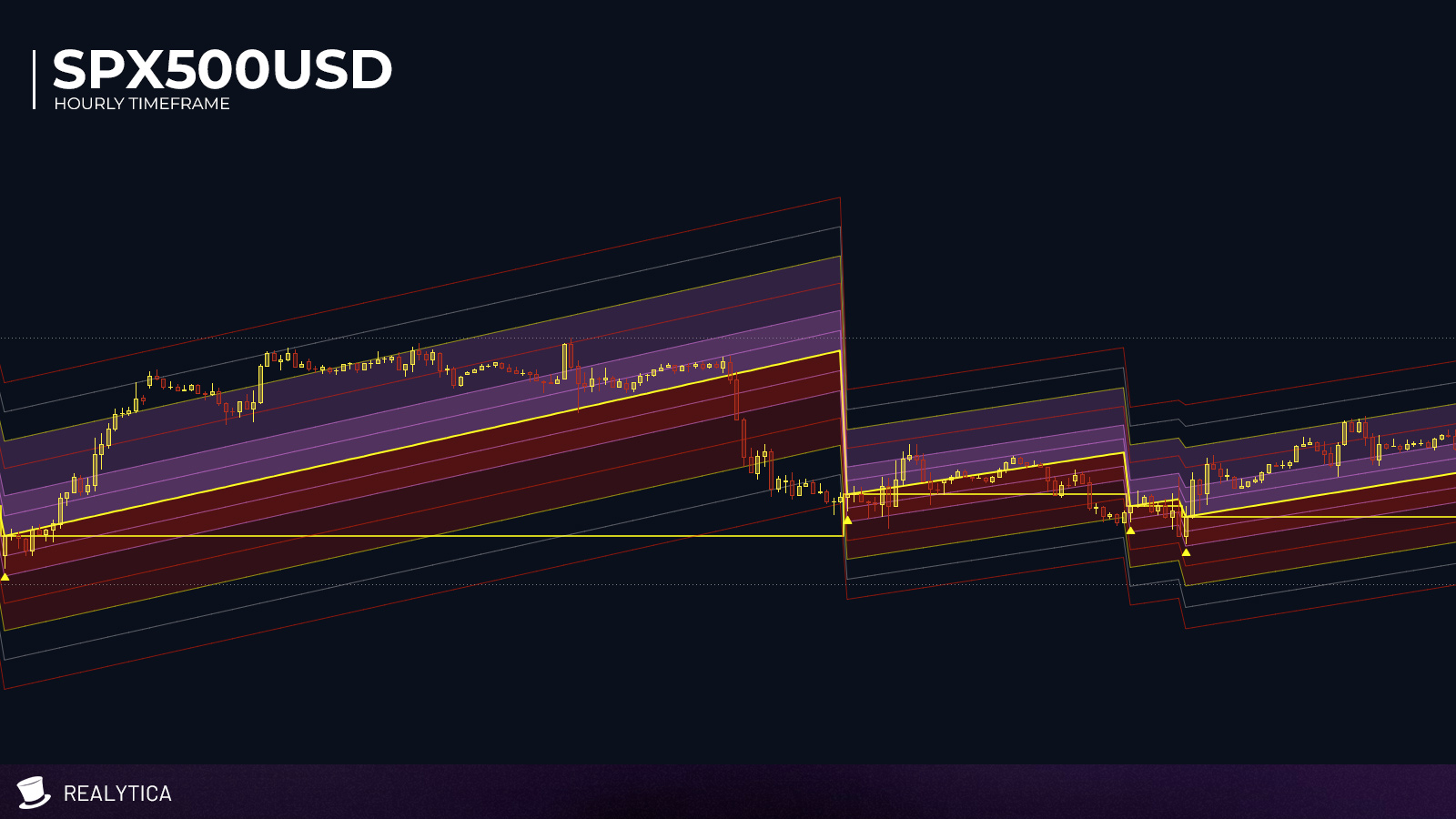
SPXUSD – 1HR
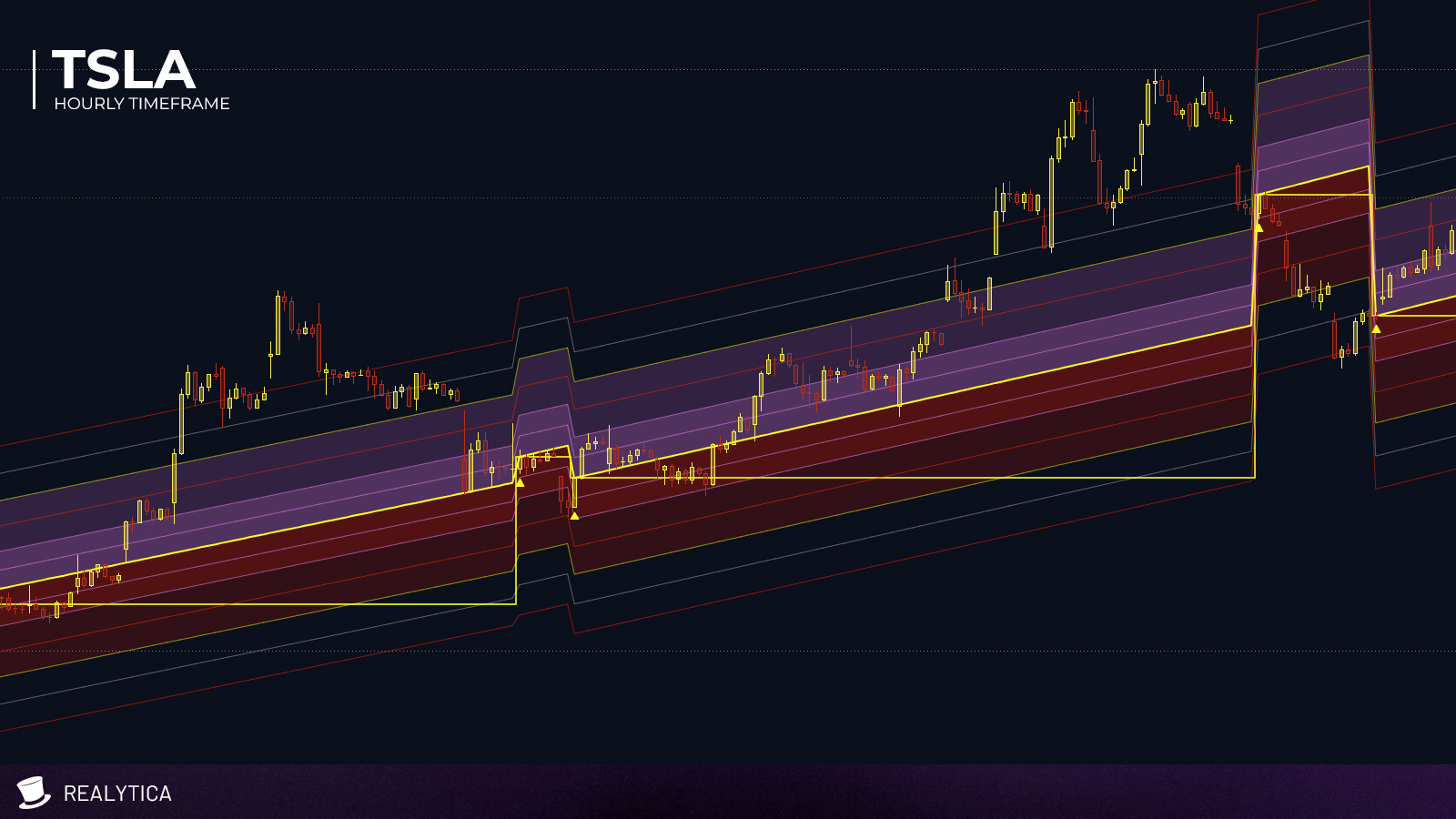
TSLA – 1HR
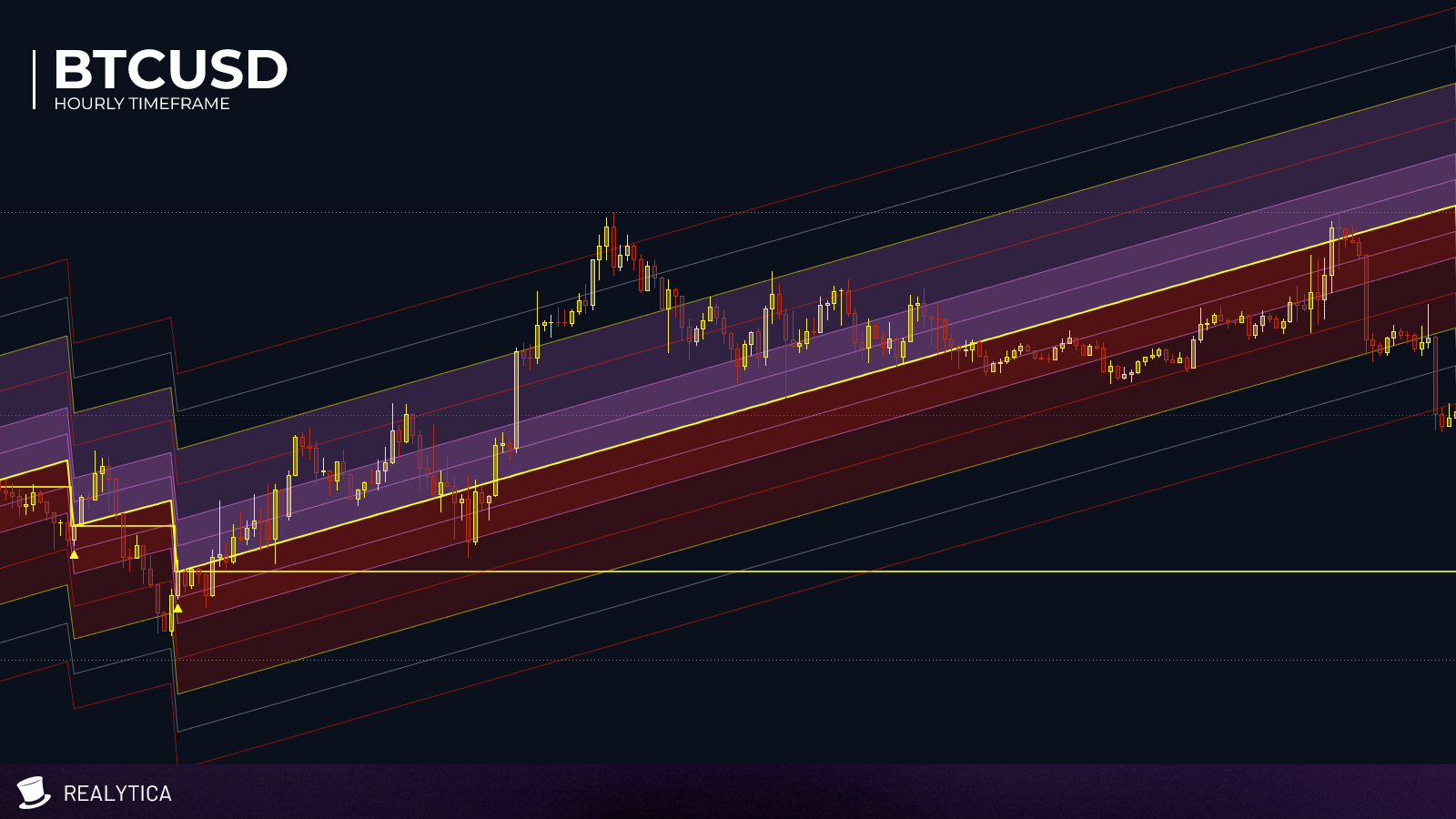
BTC – 1HR
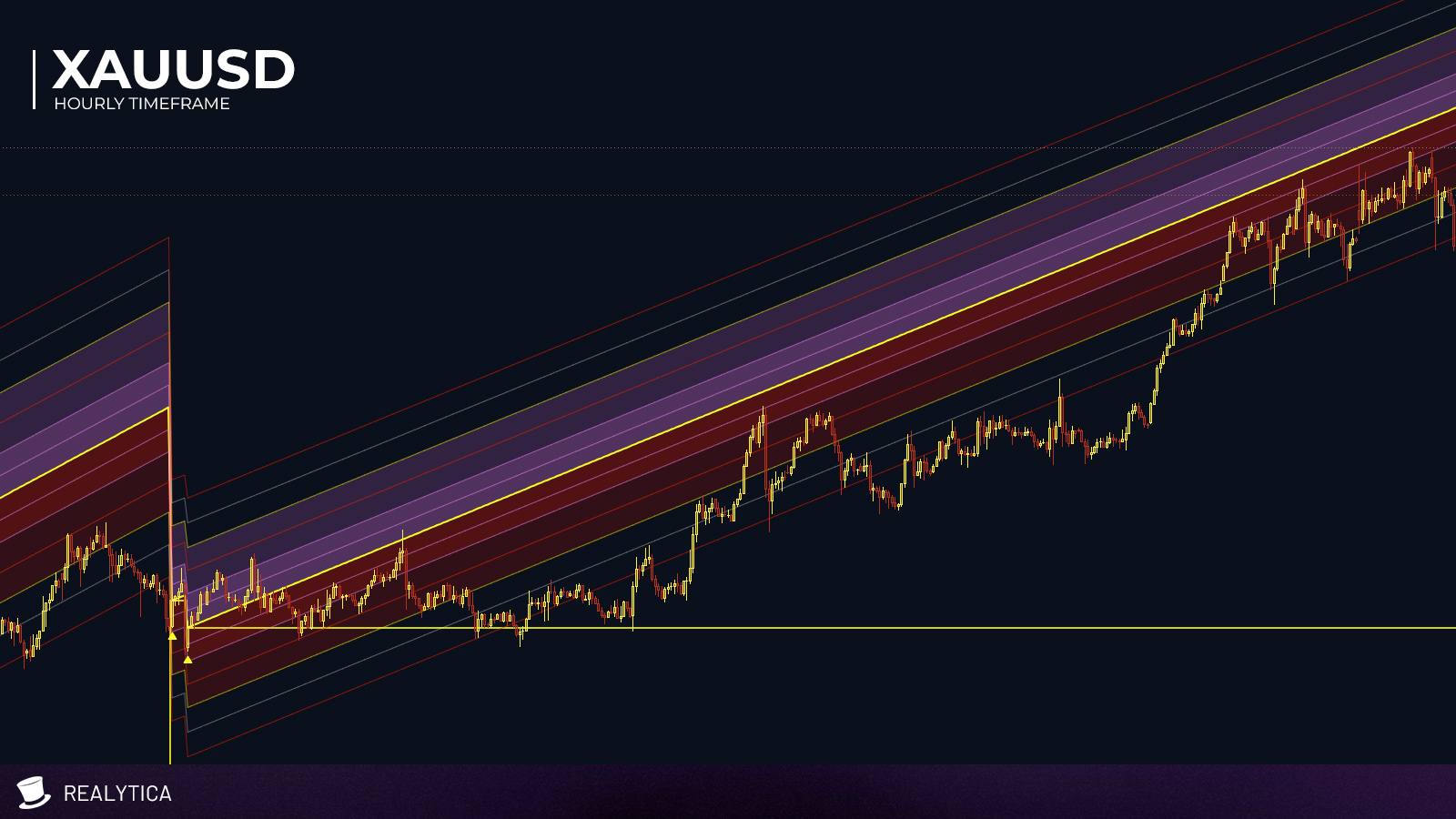
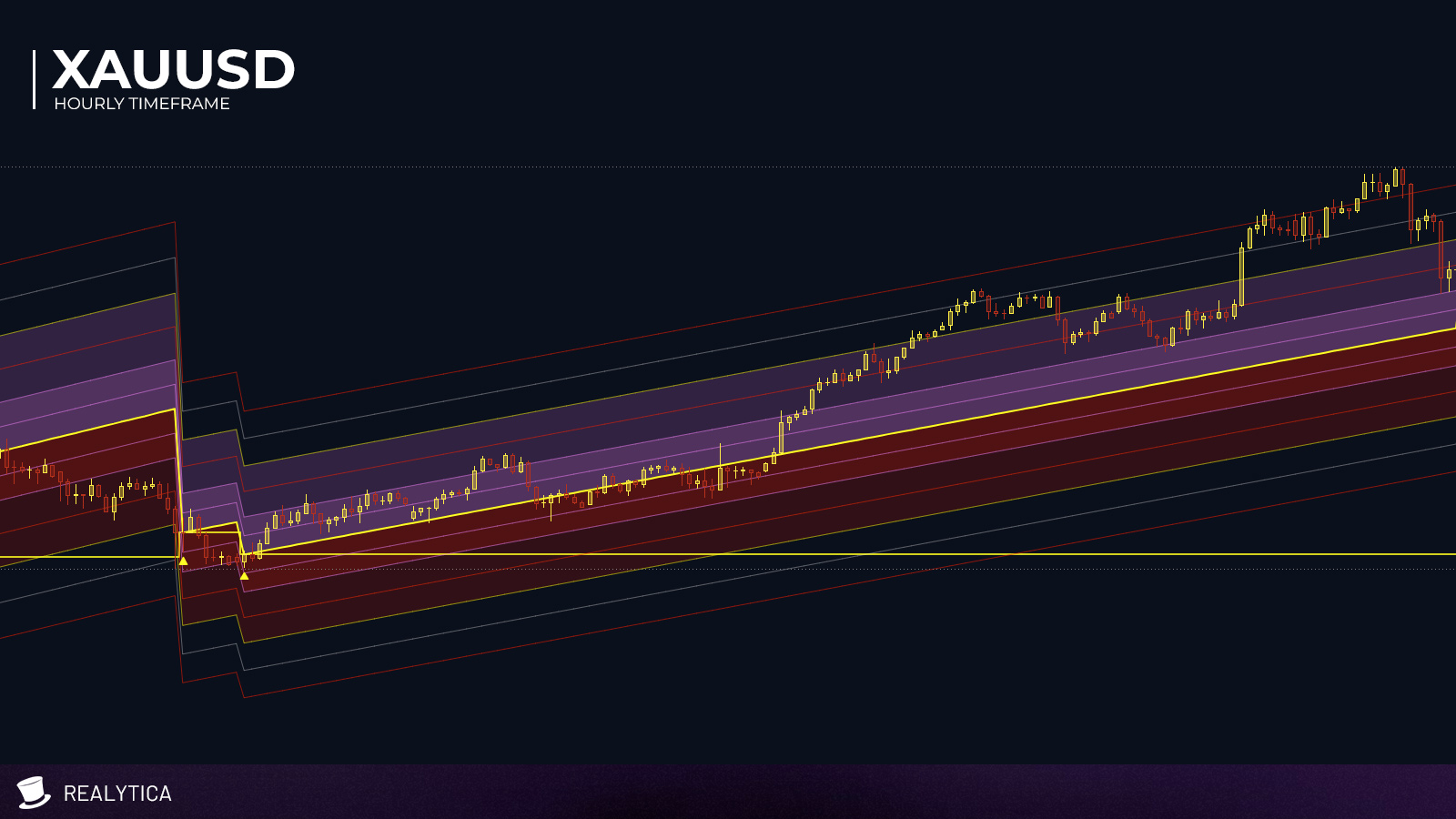
XAUUSD – 1HR
Dashboard
Sample screen shots with the indicator using the default settings. Using same time frame for consistency.
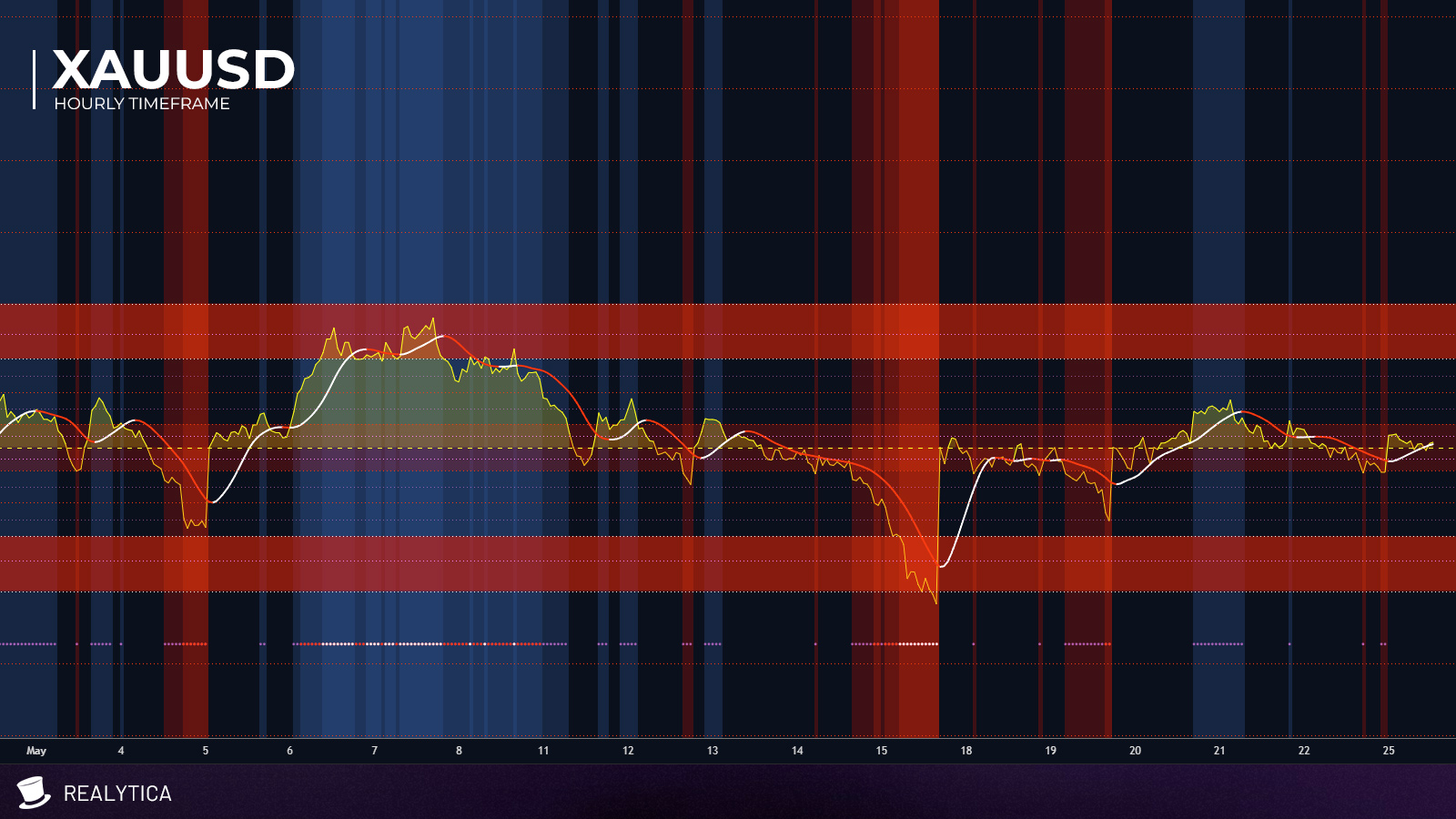
Oscillator companion.
Understanding movements in a chart + indicator environment can on occasions be further understood if we also look at it on a flat plane.
Majority of the Realytica Suite indicators come with an oscillator companion version to cover this gap — with its own features and alarms that can be user defined.
Tilted reality?
Channels are commonly portrayed as a standalone method of analyzing price movements.
When in reality it´s just a tilted perspective of values from a flat plane to an angular plane.
Understanding price movements in a channel demands one also understand that price movements now has access to movements not available on a flat plane.
This image shows the tilted reality caused by channels.
We get a duality. Price is below the center of the channel, thus should by definition be going down.
But here´s the loop hole price can utilize in a positive channel… Price can go below a level/barrier but travel upwards after. Going higher than the level price breached below. This isn´t possible in a flat plane.
All Realytica indicators have been created with the user in mind. Thus clear colors, same color coding across indicators, similar vocabulary, all in an attempt to shorten the decision process when dealing with possibly multiple indicators. And all have visual customization options in the dashboard, to make the indicator look the way the user prefers.